By Gautam Choudhary
The month of March is usually considered the onset of summer in India. However, this year, the way weather patterns have shifted across Ranchi, Jharkhand, and much of eastern India has raised serious questions about the predictability of seasonal cycles. Sudden rainfall, strong winds, hailstorms, and a noticeable drop in temperature are not merely seasonal fluctuations—they may signal a broader climatic shift.
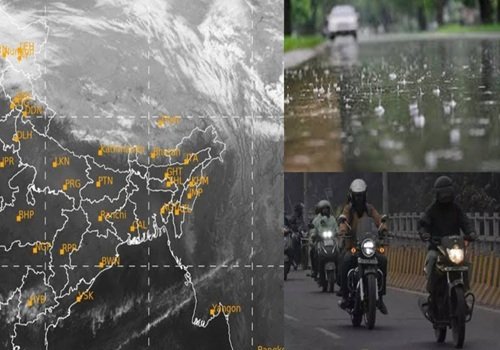
A report by Navbharat Times highlights that in recent days, several districts in Jharkhand have witnessed heavy rain and strong winds, disrupting normal life. Lightning strikes have also caused loss of life and property, underlining the severity of the situation. Meanwhile, the Meteorological Department has issued orange alerts in multiple regions, warning of storms and wind speeds reaching 60–70 km/h.
According to a report by The Times of India, this weather anomaly is not limited to Jharkhand alone. States like Uttar Pradesh, Delhi, and Odisha have also experienced unusual rainfall, leading to a drop in temperatures by 5 to 10 degrees Celsius. Clearly, this is a large-scale regional weather phenomenon rather than a localized irregularity.
The Meteorological Centre in Ranchi attributes this unusual weather primarily to Western Disturbance and local cyclonic circulations. These systems draw moisture and cooler winds into eastern India, resulting in thunderstorms, gusty winds, and sudden temperature drops.
A report in The Sunday Guardian notes that such instability is more likely during transitional periods like March, when the season shifts from winter to summer.
This untimely rainfall has become a matter of concern for farmers. Rabi crops are being directly affected—hailstorms are damaging produce, and strong winds are flattening standing crops. Additionally, lightning and storms are increasing risks in rural areas. However, The Economic Times points out a positive aspect as well: temporary relief from extreme heat and an improvement in air quality, as observed in several regions.
The increasingly erratic weather patterns raise a crucial question—is this merely a seasonal fluctuation, or a sign of climate change? Experts express growing concern, noting that extreme weather events are becoming more frequent, rainfall patterns are turning irregular, and traditional seasonal cycles are becoming unstable. In this context, active rainfall during March may be an early indicator of future climatic trends.
Warnings issued by the Meteorological Department are not just advisories—they are calls for preparedness. Avoiding open spaces during storms, taking precautions against lightning, and adopting better agricultural practices have now become essential.
In conclusion, the rainfall in Ranchi and Jharkhand is not just a weather event—it is a message from nature. It reminds us that we are living in a time when weather is no longer as predictable as it once was. The real question is not why it is raining, but whether we are prepared to adapt to this changing climate.