By Gautam Chaudhary
If humanity is to be protected from imperialist conspiracies and ideological manipulation, it is essential to present an accurate and principled interpretation of sacred scripture. Today, we address a controversial subject that has unjustly contributed to the spread of terrorism across the world.
When defining terrorism, one must proceed with caution. There is no universally accepted definition; historically, different states and powers have defined terrorism according to their own political interests. In recent times, debates have intensified over the interpretation (tafsir) of Islam’s holy book, the Qur’an. While mainstream schools of interpretation largely agree on foundational principles, certain modern groups—often aligned with political agendas—have attempted to push Islam toward extremism by distorting its teachings.
The term tafsir is Arabic and refers to the explanation or exegesis of the Qur’an. In Hindi, it may be translated as commentary or annotation. A scholar who performs tafsir is known as a mufassir. Tafsir aims to clarify the meanings, themes, purposes, and contexts of Qur’anic verses so that they may be properly understood.
However, some groups have misused tafsir to manipulate Qur’anic verses in ways that promote violence and terrorism.
The Holy Qur’an consists of 114 chapters (surahs), approximately 6,236 verses (ayat), divided into 30 sections (paras) and 7 manzils. It was revealed over a period of 23 years to Prophet Muhammad (peace be upon him). Some chapters were revealed in Mecca (Makki), generally emphasizing faith, monotheism, and patience, while others were revealed in Medina (Madani), addressing social regulations, law, and community governance.
One particularly debated verse is Qur’an 47:4, which states:
“So when you meet those who disbelieve in battle, strike their necks until, when you have subdued them, bind them firmly. Then thereafter either release them graciously or ransom them, until the war lays down its burdens.”
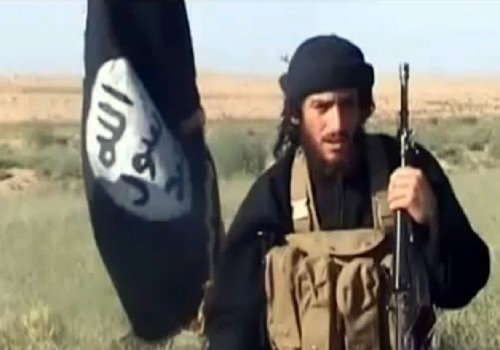
Extremist groups often isolate the phrase “strike their necks” from its historical, linguistic, and legal context and apply it to civilians, minorities, journalists, and innocent non-Muslims. This is not interpretation—it is ideological violence disguised as religious justification.
Scholars clarify that this verse addresses armed conflict, not ordinary social relations. It was revealed during an active state of war between the early Muslim community in Medina and the Quraysh of Mecca—who had persecuted, expelled, and fought against the Muslims.
The renowned exegete Ibn Kathir explains that the verse refers specifically to meeting the enemy “in battle” (fi al-qital). In Qur’anic language, “meeting” in such contexts signifies confrontation on the battlefield.
Moreover, the Qur’an itself frames warfare as defensive:
“Permission [to fight] has been given to those who are being fought, because they were wronged” (22:39).
Thus, this is not a command for religious expansion, but permission to resist oppression.
From a linguistic perspective, the phrase fa-darb al-riqab (“strike the necks”) was a classical Arabic wartime idiom meaning to fight decisively in battle. It is not a literal or universal command to kill individuals. Importantly, the verse immediately limits violence: once the enemy is subdued, prisoners are to be bound and then either released graciously or freed for ransom—“until the war lays down its burdens.”
If the objective had been indiscriminate killing, why would the verse explicitly command mercy and release?
Extremists deliberately quote only the fragment “strike their necks” while ignoring the remainder of the verse that mandates humane treatment and limits violence to the duration of war. The violence described is temporary and regulated—not permanent or indiscriminate.
The early scholar Al-Tabari described this verse as outlining the rules of warfare, not a command for religious slaughter. Likewise, Al-Qurtubi explained that the verse replaced pre-Islamic practices of killing prisoners with the more humane options of ransom or pardon—principles fundamentally opposed to terrorist conduct.
The life of Prophet Muhammad (peace be upon him) serves as a living commentary on this verse. After the Battle of Badr, prisoners were treated with dignity; some were freed in exchange for teaching literacy. He instructed his followers to treat captives kindly and explicitly forbade the killing of women, children, and the elderly.
The Qur’an further states:
“Do not transgress; indeed, Allah does not love transgressors” (2:190).
“There is no compulsion in religion” (2:256).
“Allah does not forbid you from being kind and just toward those who do not fight you because of religion” (60:8).
These verses clearly demonstrate that disbelief alone is not a justification for violence.
The reality is that the verse in question sought to regulate and humanize warfare. To transform it into a license for private violence is a betrayal not only of the text but of Islam’s ethical tradition.
The tragedy is not that Islam is violent, but that its traditions of mercy, justice, and restraint are being distorted in its name.
Such distortions serve political agendas and have been exploited both by extremist factions within Muslim communities and by Islamophobic elements in the West. Misinterpretations have caused immense harm to Islam’s image and to global peace.
It is therefore essential to remain vigilant. Non-Muslims must also understand that such extremist interpretations do not represent Islam itself. They are ideological distortions—often entangled in broader geopolitical struggles—that weaponize religion for power.
Only through contextual, scholarly, and ethically grounded interpretation can sacred texts be protected from misuse and humanity safeguarded from cycles of violence.
Translation by ChatGPT