By Gautam Chaudhary
Since the end of the World War II, the United States has played a central role in the politics, security architecture, and energy geopolitics of the Middle East. Ensuring the security of oil resources, maintaining regional stability, and protecting key allies were among the primary reasons the United States remained the most influential external power in the region for decades. However, in the third decade of the 21st century, a more serious question is being raised: is the era of American dominance in the Middle East coming to an end, or is its nature merely undergoing transformation?
The questions raised above do not have simple answers. The complexity visible in the Middle East is equally reflected in the answers to these questions. The American influence in the region, for instance, is the result of decades of strategic policymaking. The United States established security agreements with several countries in the region and built military bases to secure its strategic interests. In particular, its close strategic partnership with Israel significantly shaped the regional balance of power. Moreover, energy and defense cooperation with Saudi Arabia, United Arab Emirates, and other Gulf countries further strengthened the American position. For a long time, safeguarding oil supply and protecting maritime trade routes remained central objectives of U.S. policy.
In recent years, however, an important shift has occurred in global politics. Other major powers have also become increasingly active in the Middle East. In particular, China and Russia have strengthened their economic, diplomatic, and security engagements in the region. At the same time, even among the member states of North Atlantic Treaty Organization, the military alliance formed under U.S. leadership during the Cold War against the Soviet Union, a degree of mistrust has begun to emerge. This mistrust has been fueled by unilateral decisions and perceived assertiveness from the American leadership.
In recent years, U.S. leadership has often displayed a form of aggressive nationalism, taking several decisions that have generated significant dissatisfaction among its Western allies. In some cases, American policy decisions have even been viewed as contrary to the national interests of its own partners.
Meanwhile, in the Middle East, opposition to what many perceive as American dominance had already begun to take shape. Several countries in the region now seek to remove American military bases from their territories. Even for Israel, growing regional alignments and geopolitical shifts sometimes make American intervention appear more like a complication than a facilitator.
On the other hand, China has been deepening its economic ties with regional states through energy imports and infrastructure investments. Russia, meanwhile, has attempted to expand its influence through security cooperation and strategic partnerships. These developments have gradually turned the Middle East into a theater of multipolar competition.
Several countries in the Middle East are no longer willing to depend solely on a single global power. Instead, they are adopting more balanced and pragmatic foreign policies. While maintaining traditional security partnerships with the United States, they are simultaneously strengthening economic and technological relations with China and Russia. At the same time, some of them have expressed a desire to reduce or remove American military presence from their territories. This strategy provides them with greater autonomy and more options amid global power competition. Consequently, regional states today appear more confident than before in shaping their own foreign policies.
That said, it would be premature to conclude that American influence in the Middle East will disappear entirely. However, signs of change are clearly emerging. The current situation in the region suggests that American influence is not necessarily ending, but rather undergoing a process of rebalancing. The United States remains one of the most significant military and diplomatic powers in the region, yet it now faces increasing competition from other global actors.
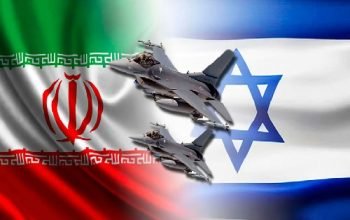
Whether a potential Iran war would weaken or strengthen American influence remains difficult to predict. Nevertheless, the emerging signals indicate that the situation is becoming increasingly complex for American diplomacy. One of the most surprising developments in the United States–Israel versus Iran confrontation has been the reaction of traditional allies. While long-standing American partners such as the United Kingdom, France, and Spain have reportedly expressed opposition to the American attack, several Middle Eastern countries that were targeted by Iranian missiles refrained from retaliating against Iran. In fact, Kuwait reportedly even shot down some American aircraft. Such developments can be interpreted as a setback for American diplomacy.
Today, the geopolitics of the Middle East has become far more complex and multipolar than before. Although American dominance does not appear to be ending entirely, it is clear that regional countries now have more strategic options and are increasingly adopting balanced diplomatic approaches. The future stability of the Middle East will depend largely on how effectively global and regional powers manage to balance competition with cooperation. If diplomacy and dialogue are prioritized, the region may eventually move toward becoming a model of cooperation rather than a perpetual arena of conflict.