By Gautam Chaudhary
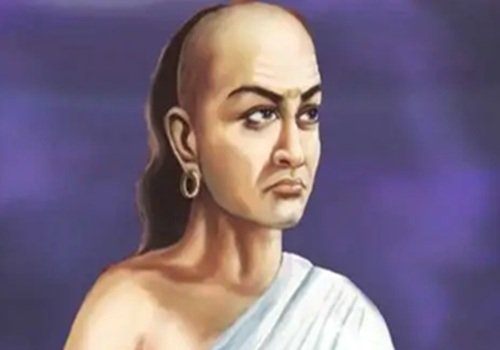
In the Indian philosophical tradition, the four Purusharthas—Dharma, Artha, Kama, and Moksha—hold special significance. Among them, Artha (wealth and material resources) occupies a central place, because without it, neither the practice of Dharma nor the fulfillment of Kama is possible. In Kautilya’s Arthashastra, it is clearly established that Artha forms the fundamental basis of the existence of the state, society, and the individual. According to Kautilya, every object and service has a value, and that value constitutes Artha. It is not limited merely to wealth or property; rather, it encompasses labor, production, services, and resources. Thus, Artha permeates every dimension of life.
The Arthashastra further clarifies that both Dharma and Kama are dependent upon Artha. If an individual or a state lacks sufficient resources, it can neither fulfill moral duties nor meet essential human desires. Therefore, prioritizing Artha is necessary, though it must always remain within ethical boundaries.
Kautilya regarded the appropriation of another’s wealth as a grave offense. He argued that harming another person’s property or resources does not merely damage the individual, but also disrupts the broader social equilibrium. When such tendencies grow, they ultimately lead to one’s own downfall. Hence, the protection of Artha is not just an individual concern, but a collective responsibility.
According to Kautilya, the strength of the state depends on its people and their resources—food, services, and production. If the state exploits these resources or violates the rights of its people, it inevitably paves the way for its own decline. In this context, Kautilya clearly stated that the duty of the ruler is to protect the people, safeguard their resources, and establish a just order.
Ultimately, Kautilya’s Arthashastra is not merely a treatise on economic policy; it presents a comprehensive philosophy of governance. It emphasizes that the protection of Artha ensures the stability of Dharma and Kama, and that safeguarding the resources of the people forms the foundation of a state’s long-term stability. Thus, Kautilya’s principle remains relevant even today: the destruction of another’s wealth ultimately leads to one’s own ruin.
Every object has value, every service has value—and whatever possesses value is Artha. This seemingly simple principle is, in reality, the cornerstone of social and political stability. In Indian thought, Artha is not confined to money or property; it represents the totality of productivity, labor, and resources in life. This is why, in Kautilya’s Arthashastra, Artha is regarded as the foundation of both Dharma and Kama.