By Gautam Chaudhary
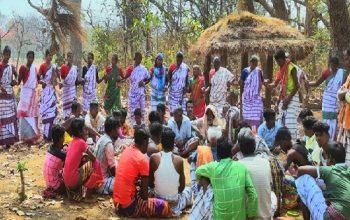
India’s tribal identity is not merely a social construct but a living cultural tradition rooted in nature, community life, and spiritual values. The recent Supreme Court decision in Digbhal Tandi v. State of Chhattisgarh gives a new direction to this debate. The ruling is significant not only from a legal standpoint but also as a recognition of the decades-old cultural struggles of tribal communities.
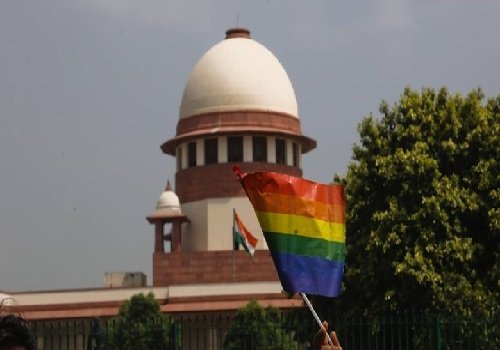
A bench comprising Justice Vikram Nath and Justice Sandeep Mehta upheld the restrictions imposed by Gram Sabhas on the entry of missionaries, observing that such measures are not repressive but “preventive” in nature—aimed at protecting tribal culture and social cohesion. The decision aligns with the spirit of the Panchayats (Extension to Scheduled Areas) Act, 1996 (PESA), which empowers Gram Sabhas to safeguard their traditions and resources.
This is not the first time the judiciary has delineated limits on the issue of religious conversion. In the landmark case of Rev. Stainislaus v. State of Madhya Pradesh, the Supreme Court had already clarified that the right to “propagate” religion does not include a fundamental right to convert another person. The present ruling builds upon that constitutional interpretation, particularly in situations where conversion may involve inducement, coercion, or misuse of services.
In this context, history offers valuable insights. Birsa Munda, during the colonial period, not only resisted political oppression but also opposed religious influences that weakened tribal culture. His ‘Ulgulan’ was not merely a rebellion but a call for cultural resurgence. Similarly, Jatra Tana Bhagat advocated social reform and religious purity, urging tribal communities to reconnect with their roots.
In independent India, Kartik Oraon warned that religious conversion alienates tribal communities from their original identity, turning it into a process of cultural disintegration rather than a mere change of faith. In modern intellectual discourse, Dr. Ramdayal Munda provided a strong philosophical foundation to this debate. He described tribal worldview as one based on harmony with nature, collective living, and cultural self-reliance, while emphasizing the need for caution against disruptive external influences.
However, this issue is not one-dimensional. While the protection of tribal identity is crucial, individual religious freedom remains a core constitutional value. The judgment, therefore, reflects a balanced approach—recognizing both community rights and individual liberties.
At the same time, it is essential to ensure that such restrictions are not exercised arbitrarily. The powers of Gram Sabhas must be guided by accountability and transparency so that they do not become instruments of suppression in the name of protection. Equally, the state bears the responsibility to design policies in education, healthcare, and development that empower tribal communities rather than making them dependent on external interventions.
Ultimately, the preservation of tribal heritage is not just a cultural concern but a question of safeguarding India’s pluralistic identity. The Supreme Court’s ruling marks an important step in this direction, reinforcing the idea that progress and modernity must go hand in hand with the protection of cultural roots.